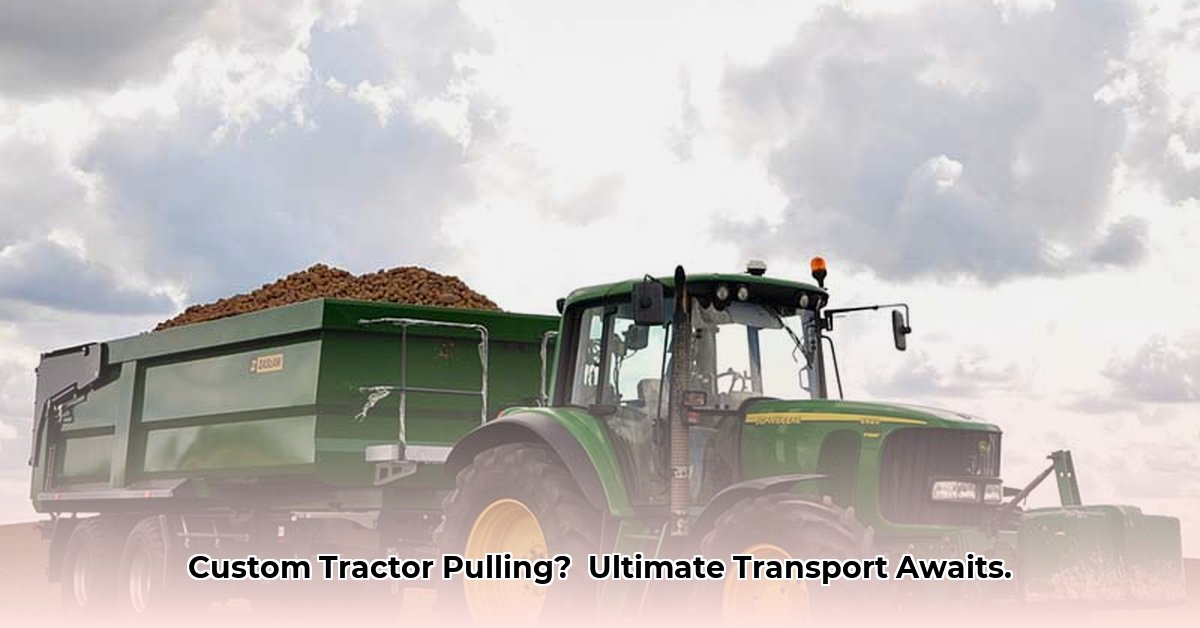
Imagine the roar of the crowd, the ground trembling beneath the power of a massive tractor straining against the pull. Getting that beast – and all your team's essential gear – to the competition safely and on time is crucial. This isn't just about metal and wheels; it's about the precision engineering and passion poured into creating the perfect transport solution for tractor pulling teams. This article delves into the world of custom-built trailers, detailing the process, key considerations, and the future of this specialized niche. Whether you're a seasoned competitor or just starting out, this guide provides the insights you need to haul your equipment to victory lane. For more on fifth wheel trailers, check out this resource.
The Unique Demands of Tractor Pulling Transport
Hauling a tractor pulling rig isn't a simple task. It's about transporting a complex, high-value piece of machinery alongside specialized equipment, spare parts, and your entire team. Consider the weight: thousands of pounds of powerful engine, delicate hydraulics, and hefty tires all needing protection. Add in winches, tools, and maybe even a small mobile workshop for on-site repairs. A standard trailer won't suffice. You need a robust, reliable solution—a custom-built trailer engineered to withstand the rigors of the road and the demands of competition. And don't forget the team's needs; do they require sleeping quarters or a workspace? A custom trailer makes it all possible. What are the key considerations when building a custom trailer for a tractor pulling rig?
Building Your Dream Tractor Pulling Trailer: A Step-by-Step Journey
Building a custom trailer is a collaborative process. It starts with listening to your needs and translating them into a reality.
Initial Consultation: Detail your tractor's size and weight, specialized equipment, budget, and team requirements. Need space for multiple tractors? A mobile workspace? Sleeping quarters? This collaborative planning lays the groundwork.
CAD Design and Refinement: Using 3D computer-aided design (CAD), you'll visualize your trailer before construction. This allows for adjustments and ensures the design aligns precisely with your specifications.
Material Selection and Construction: The choice of materials—high-strength steel, lightweight aluminum alloys, or advanced composites— impacts durability, weight, and cost. Skilled welders and fabricators bring the design to life, employing proven techniques for a robust, long-lasting outcome.
Rigorous Testing and Delivery: Before delivery, rigorous testing guarantees structural integrity and safety. Issues are identified and corrected, ensuring a flawless final product ready for competition.
Crucial Factors for Choosing Your Trailer
Several key factors influence the design, cost, and longevity of your custom trailer.
| Factor | Considerations |
|---|---|
| Material Selection | Strength, weight, corrosion resistance, and cost. High-strength steel, aluminum alloys, or composites are options. |
| Construction Techniques | Welding quality, suspension type (leaf springs, air ride), braking system (electric, hydraulic), axle configuration |
| Budget | A significant factor; consider initial cost, maintenance, and potential resale value. |
| Maintenance | Plan for regular inspections, preventative maintenance, and timely repairs to maximize your investment's lifespan. |
Success Stories: Custom Trailers in Action
We've collaborated with teams of all sizes and budgets. One team required space for three tractors plus a mobile workshop; we delivered a triple-axle trailer with a fully equipped service bay. Another team prioritized crew comfort, resulting in a trailer with climate-controlled sleeping quarters. Each trailer is unique, a testament to our collaborative design process. What are some successful examples of custom-built trailers?
The Future of Tractor Pulling Trailers: Innovation on the Horizon
The industry is constantly evolving. Lighter materials (carbon fiber composites) and smart technology (GPS tracking, remote diagnostics) promise greater fuel efficiency, enhanced safety, and increased durability. The future likely involves trailers that are not only stronger and lighter, but also smarter, providing real-time data on performance and condition.
How to Compare Custom Tractor Pulling Trailers From Different Manufacturers
Choosing the right custom trailer is crucial. How do you compare options from different manufacturers?
- Weight Capacity: Ensure it comfortably handles your tractor's weight, plus gear and towing vehicle considerations.
- Dimensions: Verify your tractor fits easily and securely.
- Axle Configuration: The number and type of axles impact stability and weight distribution—key for heavy loads.
- Design Collaboration: Does the manufacturer actively involve you in the design?
- Material Selection: High-strength steel, aluminum, or specialized materials impact durability.
- Construction Techniques: Welding quality and reinforcement influence the trailer's lifespan.
- Budget Allocation: Balance desired features with your financial resources.
- Maintenance and Repair: Inquire about maintenance, parts availability, and service.
- Warranty: A comprehensive warranty protects your investment.
Navigating the Price Landscape: Value vs. Cost
Significant price differences exist between manufacturers. Higher prices reflect enhanced material quality, construction, and features. Your choice involves balancing budget and desired features.
Key Takeaways
- Durability and weight capacity are paramount.
- Thoroughly research manufacturers, comparing prices, features, and warranties.
- Consider long-term maintenance and repair costs.
- Personalize the design to meet your team's specific needs.
- Verify compliance with all relevant transportation regulations.
This investment ensures your team arrives at each competition ready to compete. Contact us today to begin designing your ultimate tractor pulling trailer.